Concrete is hard to the touch within hours and strong enough for daily use within days, but it keeps gaining strength for about a month. In Miami, the calendar and the afternoon sky matter more than the thermometer.
How long does concrete take to cure?
Concrete reaches its design strength in about 28 days. It gains most of that in the first week. Curing is not drying. The slab needs to keep its moisture while it hardens, so in our sun and breeze it is covered, sprayed with curing compound or kept damp for the first days.
| Use | Usual wait |
|---|---|
| Foot traffic | 1 to 2 days |
| Cars and light pickups | About 7 days |
| Heavy trucks, trailers, RVs | About 28 days |
| Sealer or coatings | About 28 days, per the product label |
How long before I can walk on new concrete?
You can walk on new concrete after 1 to 2 days in normal Miami weather. Keep pets, bikes and anything with small hard wheels off it a little longer, because the surface still marks.
How long before I can drive on new concrete?
Wait about 7 days before you drive on new concrete with a car or light pickup. Keep heavy vehicles off for about 28 days. For the first weeks, do not turn the steering wheel while the car is standing still, and stay back from the edges, which are the weakest part.
How long does it take to pour a driveway?
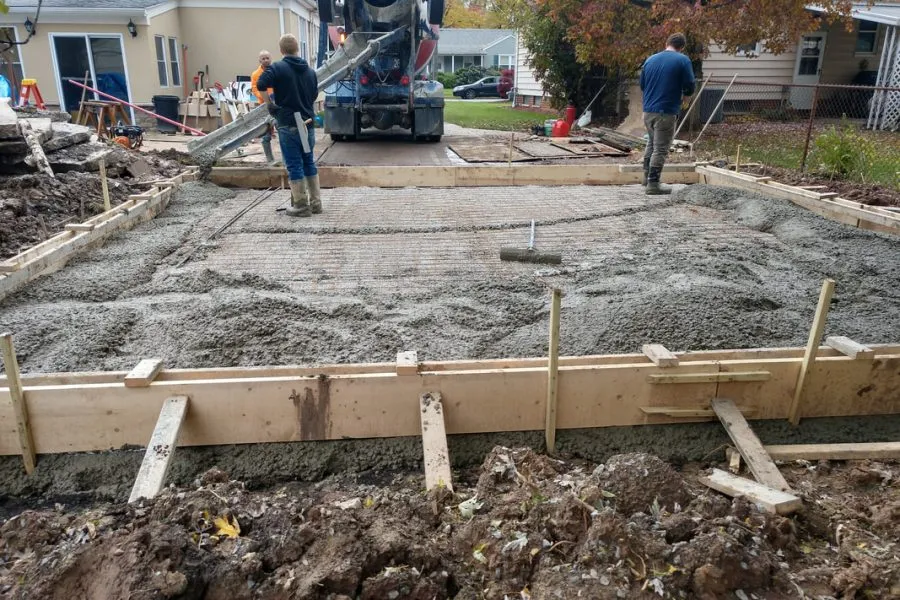
Most driveways and patios take 1 to 2 days of preparation and one day to pour. Preparation is breaking out the old slab, grading and compacting the base, and setting forms and steel. Add time for the permit and any inspection before the pour, and for rain. Then comes the week of waiting before you park on it.
Can concrete be poured in the rain?
Concrete should not be poured in the rain if the rain is steady or heavy. A light passing shower can be managed with covers. From about June to October, storms in Miami tend to arrive in the afternoon, so pours are booked for early morning to be finished and set before the sky opens. If the forecast is poor, moving the date is the right call.
Is it ever too hot to pour concrete in Miami?
It is rarely too hot to pour at all, but summer heat changes how the job must be run. Hot concrete sets fast and loses surface water quickly, which leads to cracks and a weak top. The answer is to start at first light, dampen the base, have enough finishers on site and begin curing straight away. A mid-afternoon pour in August is asking for trouble.
Can concrete be poured in cold or freezing weather?
In Miami this almost never comes up. Freezing temperatures are extremely rare here, and it is never too cold for long enough to stop a pour. On the few cool winter mornings concrete simply sets more slowly, which finishers tend to like. The cold-weather precautions used up north are not part of work here.
What is the best time of year to pour concrete in Miami?
The best time of year is the dry season, roughly November through April. Days are mild, humidity is lower and rain is scarce, so scheduling is easy and curing is gentle. Work goes on all summer too, with early starts and an eye on radar. During hurricane season, a named storm on the way means no pour, and loose forms and materials get tied down or taken away.
Does deicer or salt harm concrete here?
Nobody uses deicer in Miami, so that problem does not exist here. Salt is a different story. It arrives in the air from the ocean and the bay, in tidal flooding on the lowest streets, and from salt-system pools that splash onto the deck. It does not eat the surface the way it does in freezing climates. It works its way in over years and rusts the steel. Rinsing a pool deck with fresh water and keeping it sealed slows that down.
How soon after a pour can I put furniture, planters or a grill on a patio?
Light furniture can go on after two or three days. Hold off about a week for heavy planters, a large grill or a filled kiddie pool. Do not leave rubber-backed mats, plastic sheets or pots sitting on new concrete for the first month, since they trap moisture and leave marks.
For a price on your own property, ask for a free on-site estimate with a written quote. Call (786) 705-4727, or text a photo of the concrete to the same number.